
“The story of the transformation of a 170 acre field right in the city of Oakland into a community of homes, with its own park railroad station and civic center, is one of the business romances of the west. This is the story of Havenscourt.”
The San Francisco Call, November 29, 1913
From cattle field to neighborhood
While the history of the land itself goes back much further, Havenscourt’s history as a neighborhood dates to 1912.
In 1912, Wickham Havens, Inc. purchased a 170-acre tract of cattle-grazing fields from the Pope estate of San Francisco and turned it into a neighborhood, complete with California bungalows, a civic center, and a train station with service to Oakland and San Francisco.

By 1913, The San Francisco Call was calling Havenscourt “one of the business romances of the west,” and marveling at what the empty field had become in a short time:
“Where a little more than a year ago a herd of cattle ranged over this fertile field, today […] there are four miles of the finest oil-macadam pavements. There are six miles of concrete sidewalks, seven miles of sewers, and seven miles of water mains have been completed, more than many large towns and county seats in California can boast.”
The Havens family
The developer · 1874–1934
Wickham Havens
Wickham Havens was a prolific East Bay real estate developer. Besides Havenscourt, his company laid out Crocker Highlands, Haddon Hill, East Piedmont Heights and several other tracts around Lake Merritt and Piedmont, and he served as president of the Oakland Real Estate Board in 1918–19.
In 1914, just two years after launching Havenscourt, Wickham Havens, Inc. sold the remaining Havenscourt land to E. J. Henderson, who carried on the building, so the company could focus on developing Piedmont.
His father · 1848–1918
Frank C. Havens and the eucalyptus
Wickham’s father, Frank C. Havens, was a developer and one-time business partner of “Borax” Smith. He’s the reason so much of the Oakland hills is covered in eucalyptus: his Mahogany Eucalyptus and Land Company imported seedlings from Australia and planted an estimated one to three million of them across the East Bay hills, hoping to grow a fast hardwood forest for timber. The wood turned out to be unsuitable for building, but the trees stayed.
Frank Havens lived at Wildwood, his estate in Piedmont, which was completed in 1911.
The pergola at the gate
The official entrance was at Havenscourt Boulevard and East 14th Street (now International Boulevard). A pergola and gazebo marked the entrance to the neighborhood: rows of Tuscan columns topped with beams and rafters cut into graceful scrolled ends. A Southern Pacific station, built in 1913, stood right beside it. That pergola is the structure in our logo. You can see a 1915 photograph of it, with the smokestacks of the Chevrolet plant in the distance, in the Oakland Public Library’s digital collections.
The end of the A Line
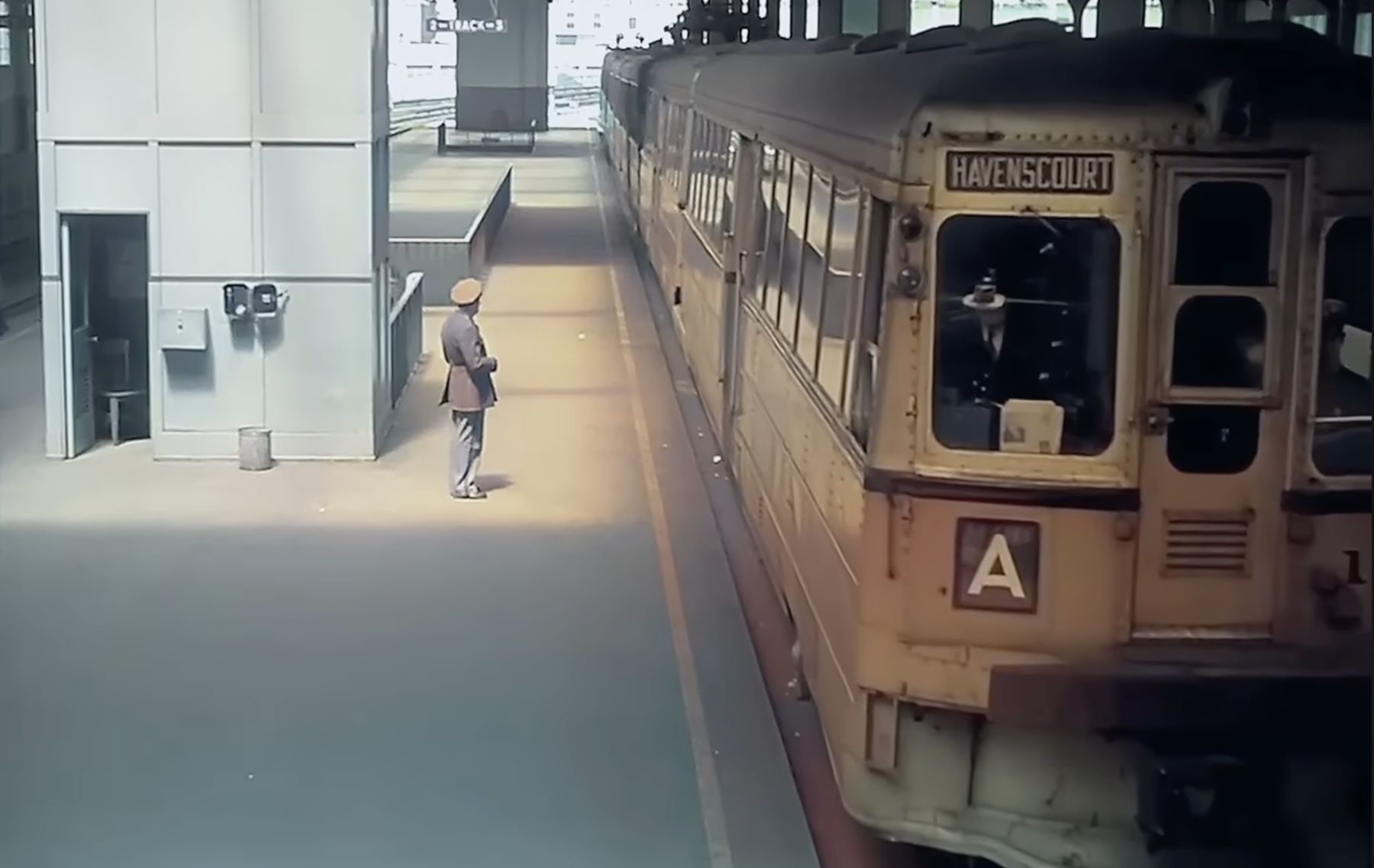
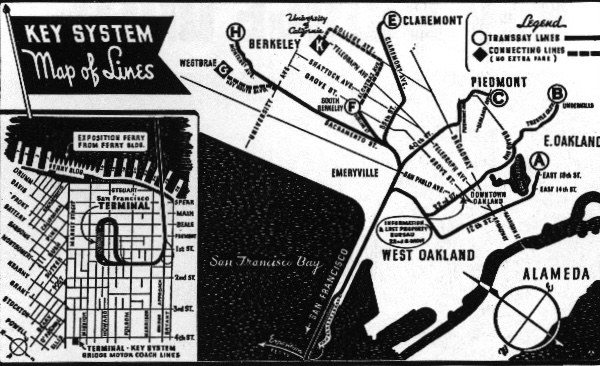
The Havenscourt train station and business district were located at the intersection of Havenscourt Boulevard and Bancroft Avenue, and residents rode the trolley along East 14th Street. The Key System’s “A” line also ended on Havenscourt Boulevard, connecting the neighborhood to downtown Oakland and on to San Francisco. That’s the train in our logo, passing through the pergola. It also gives our neighbors at the Beat 30X NCPC their name: The A-Line Neighbors.
Neighbors to the Detroit of the West
Just up the road, the Chevrolet assembly plant opened in 1916 as the first automobile factory on the West Coast, and many Havenscourt residents commuted there to work. It sat on Foothill Boulevard, along the route of the Lincoln Highway, America’s first coast-to-coast road for cars. By the time it closed it was turning out around 55 cars an hour. In 1963 General Motors moved production to Fremont, and Eastmont Mall (now the Eastmont Town Center) opened on the site in 1966.
A history to remember
Like many East Bay tracts of its era, Havenscourt was first sold with racially restrictive terms: early sales barred Black, Japanese and Chinese buyers. Restrictions like these were made unenforceable by the U.S. Supreme Court in 1948 and outlawed by the Fair Housing Act of 1968. Today Havenscourt is home to neighbors of every background, and the HNA’s mission is to make it a place all of us are proud to call home.
Havenscourt through the years
- 1912 Wickham Havens, Inc. buys 170 acres from the Pope estate and opens Havenscourt.
- 1913 A Southern Pacific station opens beside the entrance pergola. The San Francisco Call calls Havenscourt “one of the business romances of the west.”
- 1914 The remaining tract is sold to E. J. Henderson; Wickham Havens turns to Piedmont.
- 1916 The Chevrolet assembly plant opens on Foothill Boulevard.
- 1958 Key System trains stop running across the Bay Bridge; buses take over.
- 1963 The Chevrolet plant closes; Eastmont Mall opens on the site in 1966.
- 1996 East 14th Street is renamed International Boulevard.
- 2018 Neighbors found the Havenscourt Neighborhood Association.
Then and now


Then-and-now images via A Bit of History. Sources include Oakland Wiki’s pages on the Havenscourt Tract and Frank C. Havens, and the History of Piedmont.
This history is a work in progress. If you have photos, stories or records about the history of Havenscourt, we’d love to hear from you. Email us!